Amala
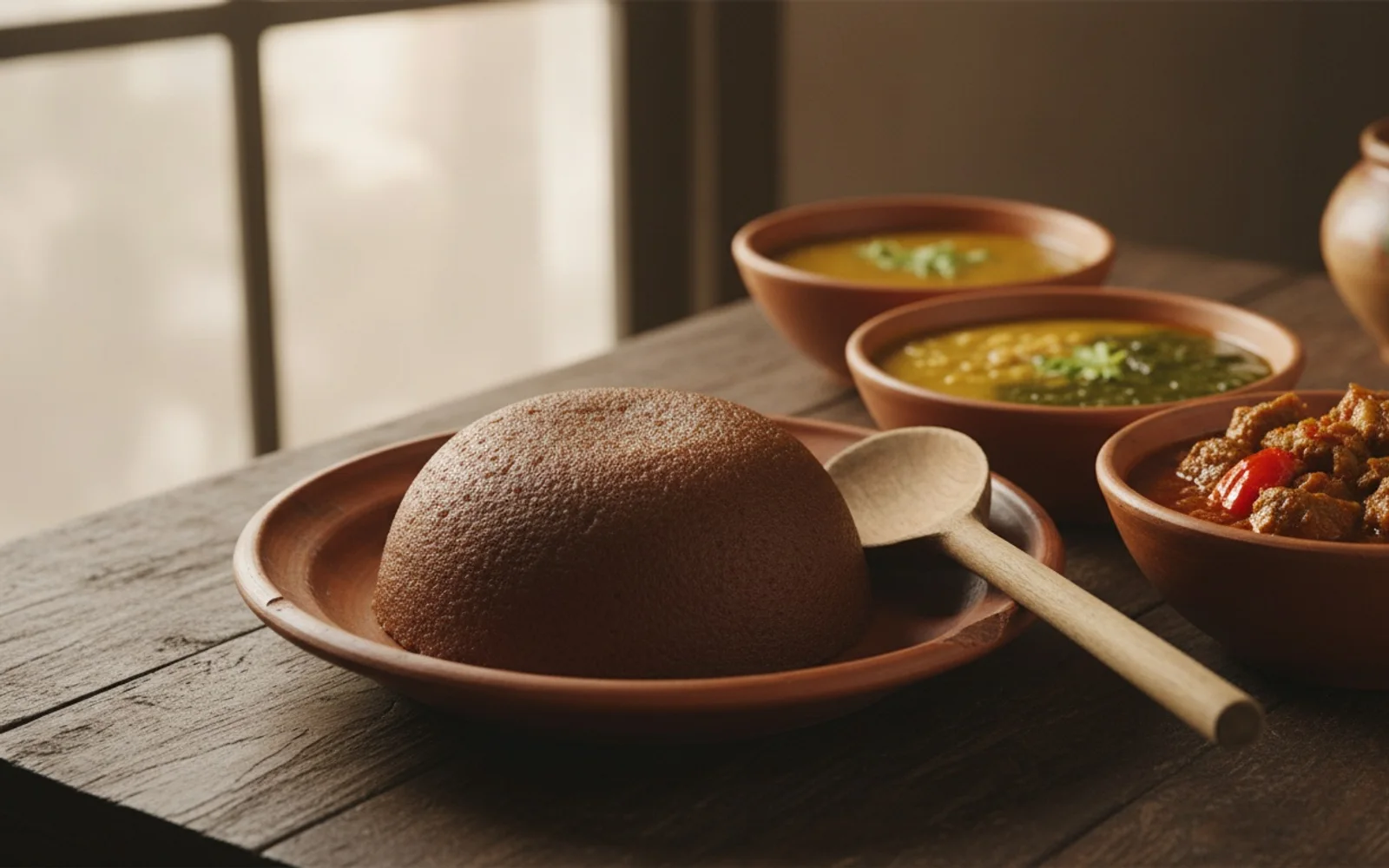
Amala is yam flour (elubo) stirred into boiling water until smooth and deep brown. It smells earthy, rolls darker than eba, and in Yoruba tradition it asks for a specific soup combination, gbegiri, ewedu, and stew meat, that Nigerian-Americans recreate even when one component is missing.
- Time
- 15 min
- Serves
- 4
- Patience
- Gentle
- Occasion
- Everyday & celebration
Where this dish comes from
Amala is southwestern Nigeria's signature swallow, especially Oyo and Lagos. Yam flour is different from cassava; the finished swallow is darker, softer, and more perishable than eba.
Swallow technique: amala is softer than eba: use slightly smaller balls and swallow gently. Traditional pairing is abula: gbegiri (bean soup), ewedu (jute leaf soup), and obe ata (red stew) together. Diaspora cooks often pair amala with egusi or efo riro when abula is too much for a weeknight, document your house's rule.
Ingredients
- 2 cups (200 g) amala flour (yam flour / elubo)
- 2 1/2 cups (600 ml) water
- Pinch of salt (optional)
The method
Step 1: Bring 2 cups (480 ml) water to a boil in a heavy pot. Reserve 1/2 cup (120 ml) cold water nearby.
Step 2: Reduce to medium heat. Sprinkle amala flour gradually while stirring constantly with a strong wooden spoon.
Step 3: Keep stirring vigorously 3–5 minutes until smooth, thick, and dark brown with no lumps.
Step 4: If too thick, add reserved water a splash at a time while stirring. Amala should be soft and pliable, not stiff like eba.
Step 5: Turn out onto plates. Serve immediately with gbegiri, ewedu, and stew, or your family's chosen soup.
Family notes ✎
- Some families add a spoon of palm oil to the pot for gloss; purists use flour and water only.
- Plantain flour amala (amala ogede) is a variant, different flour, different tradition. Do not conflate without noting.
- Keep stirring through the first minute off the boil: amala lumps form fast if you pause.
Substitutions
- Preferred: Amala flour (elubo / yam flour) from African markets, not instant pounded yam flour.
- Emergency: If gbegiri and ewedu are unavailable, egusi or efo riro still work: note as diaspora adaptation.
On the calendarSaturday lunch, Oyo-style spreads, and the meal that tests whether your ewedu is slimy enough.

Go deeper
The Nigerian-American Table
Nigerian home cooking for the diaspora kitchen: 51 recipes, a U.S. pantry guide, and the occasion behind every dish.
Get the guide, $29