Bitterleaf Soup (Ofe Onugbu)
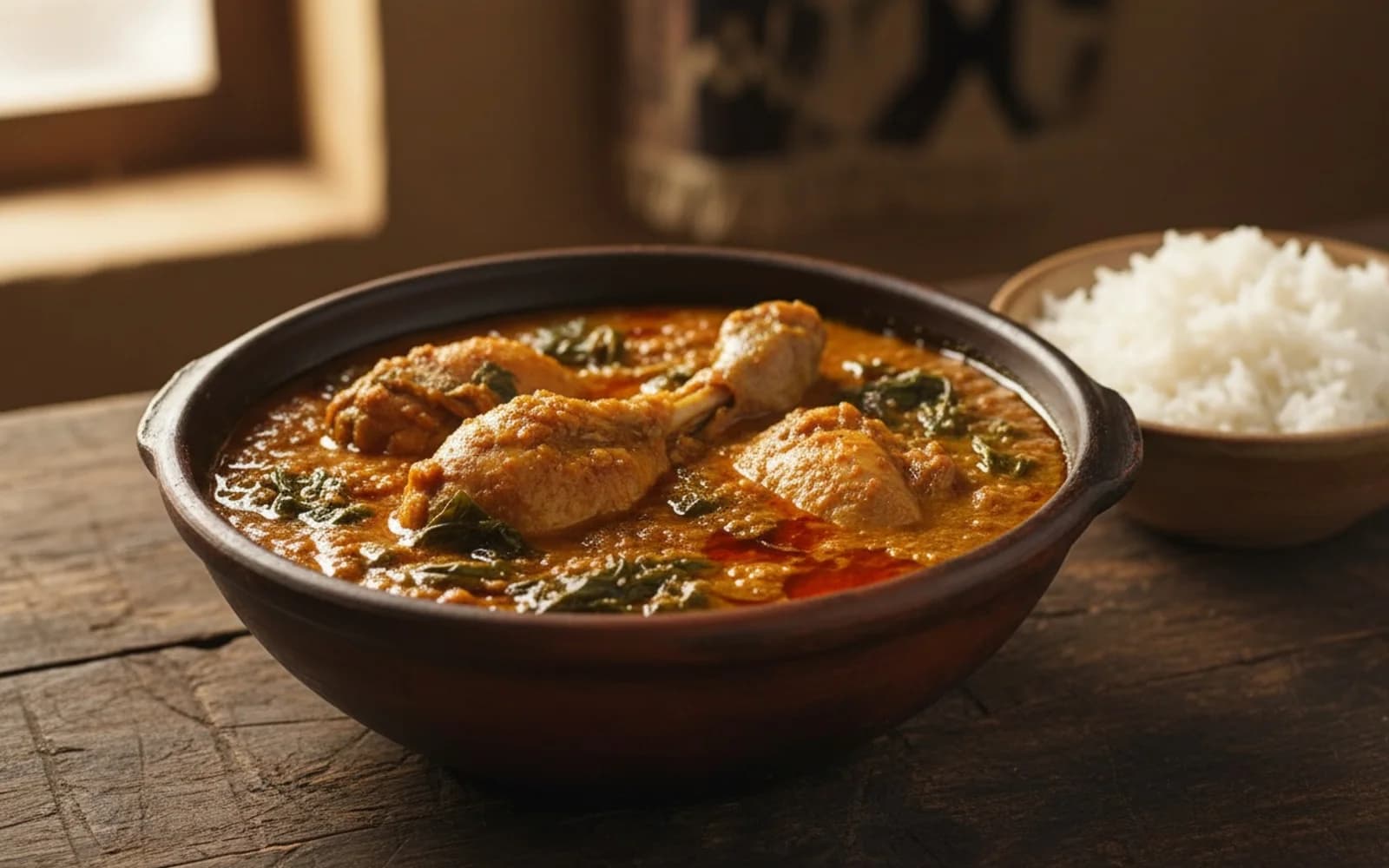
Ofe onugbu is Igbo heritage in a pot: bitterleaf washed until only a pleasant edge remains, cocoyam paste for body, and a generous mix of meats, stockfish, and sometimes ogili (fermented seeds). It is celebratory food across Anambra and Imo.
- Time
- 1 hr 30 min
- Serves
- 6–8
- Patience
- Some patience
- Occasion
- Celebration & everyday
Where this dish comes from
Bitterleaf (Vernonia amygdalina) must be washed repeatedly — sometimes pounded with salt — to remove harsh bitterness. Pre-washed bitterleaf sold frozen is a diaspora lifesaver; taste and wash again if needed.
Cocoyam (edo) thickens the soup. Some families use achi or ofo as alternate thickeners.
Ingredients
Bitterleaf
- 2 cups (about 4 oz / 115 g) bitterleaf (onugbu), washed 3–5 times and squeezed dry, or pre-washed frozen bitterleaf, thawed and rinsed
Soup
- 1/2 cup (120 ml) red palm oil
- 1 medium onion (about 6 oz / 170 g), chopped
- 2 tbsp (20 g) ground crayfish
- 1 tbsp (15 g) locust beans (ogiri igbo), rinsed
- 1–2 scotch bonnet peppers, whole
- 1 lb (450 g) cocoyam (edo), boiled, peeled, and pounded smooth (about 1 cup / 250 g paste)
- 4 cups (960 ml) meat stock
- 1 lb (450 g) assorted meats (goat, beef, cow foot), cooked tender
- 3 oz (85 g) dried stockfish, soaked and shredded
- 2 oz (55 g) smoked dried fish
- 2 seasoning cubes, crushed
- 1 tsp salt, to taste
The method
Step 1: Wash bitterleaf repeatedly in cold water, squeezing and rinsing until bitterness is mellow — taste a leaf. Drain and squeeze dry.
Step 2: Boil cocoyam until soft, peel, and pound to a smooth paste. Set aside.
Step 3: Heat palm oil in a pot. Fry onion until soft. Add crayfish, ogiri, and scotch bonnet. Fry 2 minutes.
Step 4: Pour in stock. Add cooked meats, stockfish, and smoked fish. Simmer 10 minutes.
Step 5: Add cocoyam paste in lumps, stirring to dissolve. The soup will thicken quickly — stir smoothly to avoid lumps.
Step 6: Simmer 15–20 minutes until the soup is thick, smooth, and oil floats on top. The raw cocoyam taste must be gone.
Step 7: Add bitterleaf in the last 5–10 minutes. Do not overcook — the leaves should stay dark green. Taste and adjust salt. Serve with fufu or pounded yam.
Family notes ✎
- Anambra ofe onugbu often uses more cocoyam for a thicker pot; Imo versions may be slightly thinner.
- Some families add a small amount of ground egusi — ask before you assume it's pure cocoyam.
- The bitterleaf should taste earthy and slightly bitter, not harshly so.
Substitutions
- Preferred: Fresh bitterleaf, washed at home — the washing is ritual.
- Preferred: Fresh cocoyam (edo) for thickening.
- Emergency: Pre-washed frozen bitterleaf — rinse again and taste.
- Emergency: Achi or potato starch slurry if cocoyam is unavailable — texture differs.
On the calendarTraditional weddings, Christmas in the east, and the soup that tests whether the bitterleaf was washed enough.
Dietspora · Recipe Ebook
The Nigerian-American Table
Nigerian-American
Go deeper
The Nigerian-American Table
Nigerian home cooking for the diaspora kitchen — 51 recipes and pages to record your family's version.
Get the guide — $29