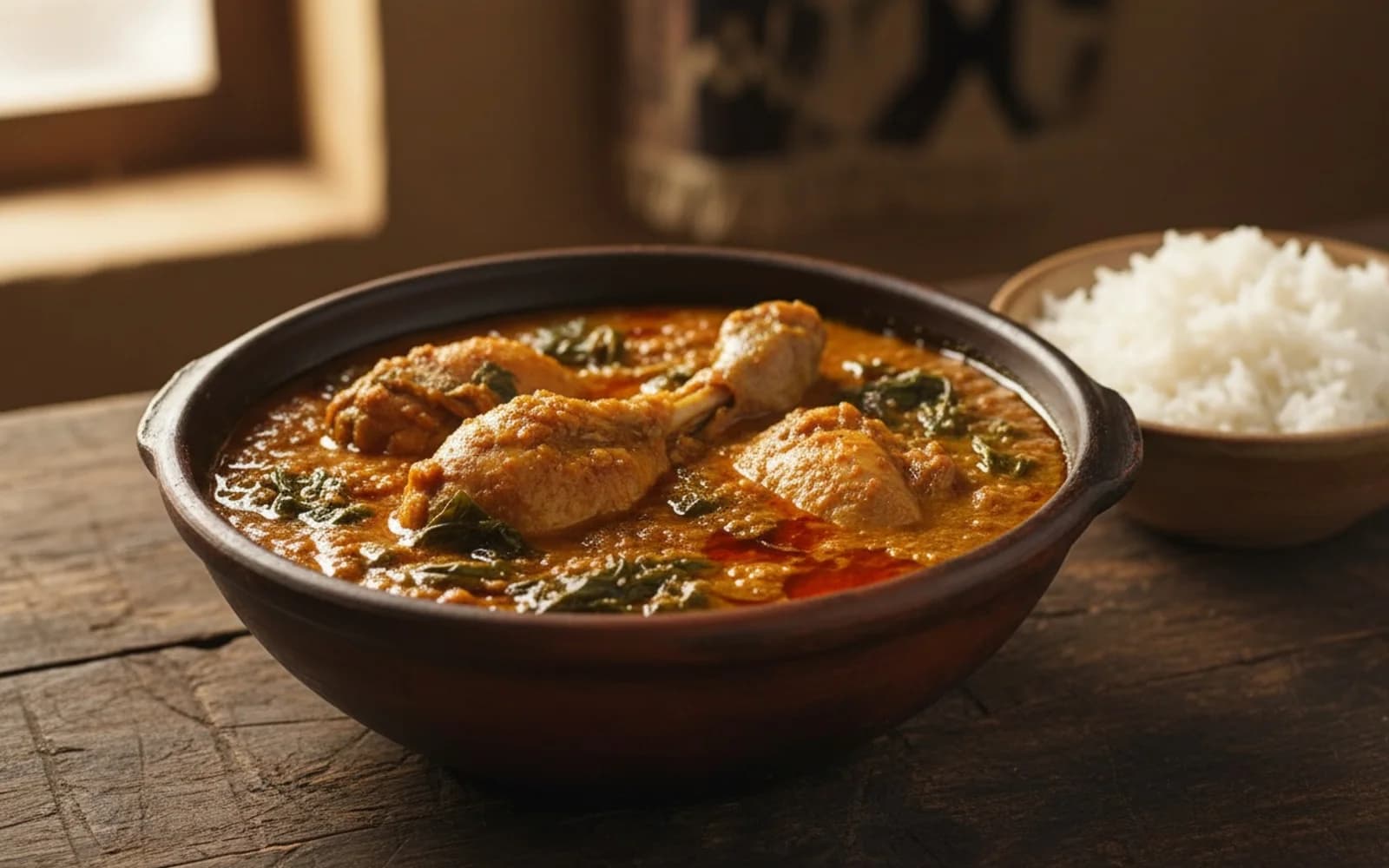
Egusi Soup
Egusi soup is one of Nigeria's great shared dishes — made across Igbo, Yoruba, Hausa, and Delta kitchens with real variation in technique. Igbo versions often fry the ground seeds in palm oil before adding stock; Yoruba styles may incorporate more vegetables and a slightly thinner consistency. Both are legitimate.
- Time
- 1 hr 15 min
- Serves
- 6–8
- Patience
- Some patience
- Occasion
- Everyday & celebration
Where this dish comes from
Egusi (melon seeds) are ground and cooked into a thick, nutty soup that clings to swallow — pounded yam, eba, or fufu. The seeds themselves are mild; the depth comes from palm oil, stockfish, crayfish, and meat.
This template presents the widely used fried-egusi method with notes on regional variation. Your family's version may differ in thickness, greens, and whether the egusi is fried or boiled in.
Ingredients
Egusi base
- 2 cups (280 g) ground egusi (melon seeds)
- 1/3 cup (80 ml) red palm oil
- 1 large onion (about 8 oz / 225 g), half blended, half chopped
- 2 tbsp (20 g) ground crayfish
- 1 tbsp (15 g) locust beans (iru), rinsed (more common in Yoruba versions)
- 3 tbsp (45 g) tomato paste
- 1–2 scotch bonnet peppers, blended or whole
Stock and protein
- 4 cups (960 ml) meat stock (beef, goat, or chicken)
- 1 lb (450 g) assorted meats (beef, goat, tripe — pre-cooked tender) or raw chicken
- 2 oz (55 g) dried stockfish, soaked and shredded
- 1 oz (30 g) smoked dried fish, cleaned
- 2 seasoning cubes, crushed
- 2 cups (about 4 oz / 115 g) bitterleaf or spinach, washed and chopped
- 1 tsp salt, to taste
The method
Step 1: If using raw meat, season and boil until tender first; reserve stock. Soak stockfish if dry.
Step 2: Mix ground egusi with enough water (about 1/2 cup / 120 ml) to form a thick paste. Set aside.
Step 3: Heat palm oil in a heavy pot over medium. Fry chopped onion until soft. Add tomato paste and fry until darkened, 2–3 minutes.
Step 4: Add the egusi paste in lumps. Do not stir immediately — let it fry 2–3 minutes until the lumps set and begin to brown at the edges. Then break up and stir. The egusi should smell toasted and nutty, not raw.
Step 5: Add blended onion and scotch bonnet, crayfish, iru, stockfish, and smoked fish. Stir and fry 3–4 minutes.
Step 6: Pour in stock gradually, stirring to break lumps. Add cooked meats and seasoning cubes. Simmer 15–20 minutes, stirring occasionally, until the soup thickens and oil floats on top.
Step 7: Add greens in the last 5 minutes. The soup should be thick enough to coat a spoon but pourable. Taste and adjust salt. Serve with swallow of choice.
Family notes ✎
- Igbo egusi often fries the seeds first for a thicker, chunkier texture. Some Yoruba versions incorporate more tomato and iru for a slightly thinner, redder soup.
- Bitterleaf is traditional in Igbo egusi; Yoruba versions may use spinach (efo tete) or pumpkin leaves.
- Some families add okporoko in large pieces; others shred it fine.
Substitutions
- Preferred: Freshly ground egusi from African markets — seeds ground to coarse meal, not flour.
- Preferred: Bitterleaf, washed repeatedly to reduce bitterness, for Igbo-style egusi.
- Emergency: Pumpkin seeds ground in a spice grinder if egusi is unavailable.
- Emergency: Spinach instead of bitterleaf — add at the end to stay bright.
On the calendarSunday soup, wedding spreads, and any meal that needs a pot thick enough to feed a table.
Dietspora · Recipe Ebook
The Nigerian-American Table
Nigerian-American
Go deeper
The Nigerian-American Table
Nigerian home cooking for the diaspora kitchen — 51 recipes and pages to record your family's version.
Get the guide — $29