Nigerian Red Stew (Obe Ata)
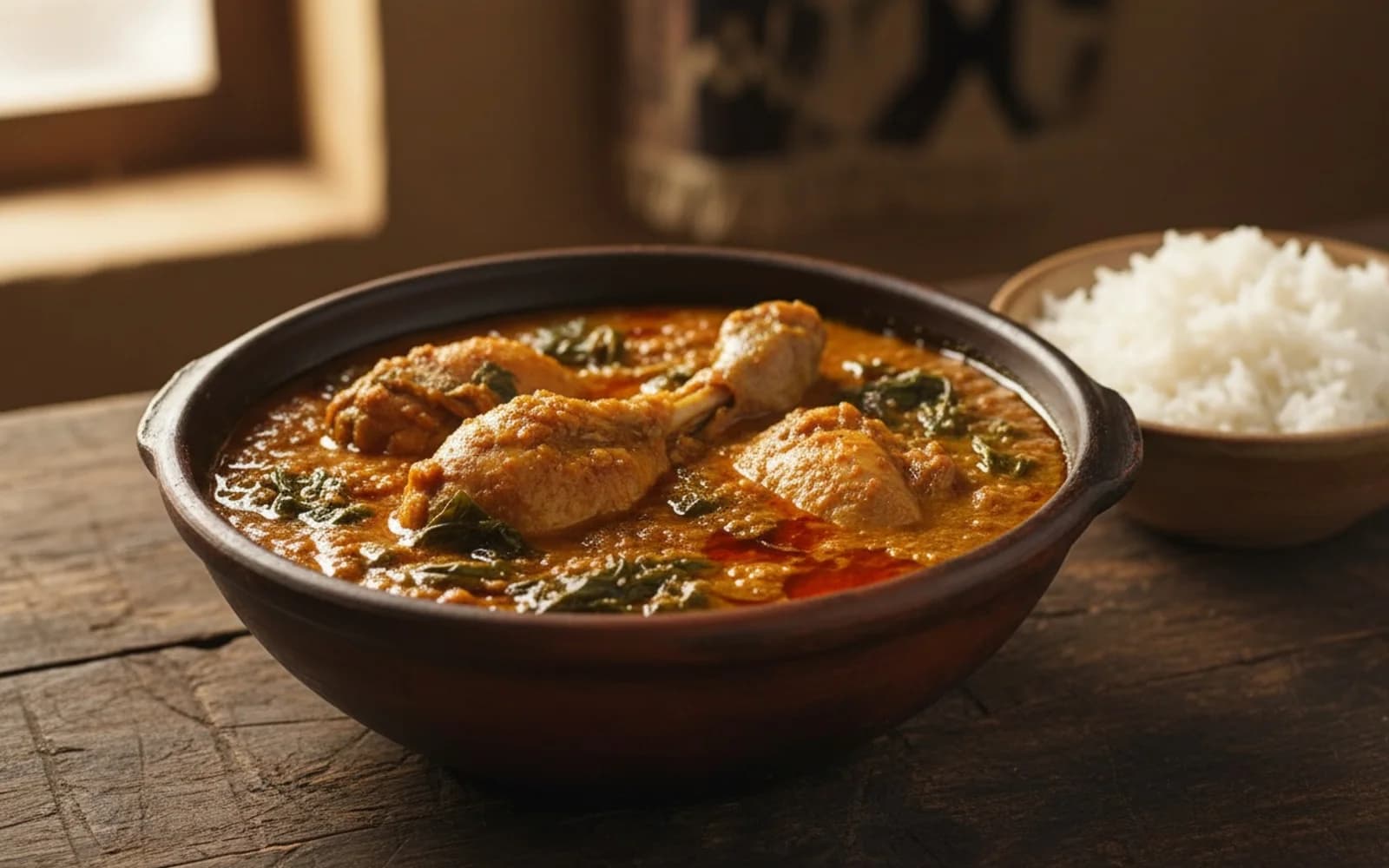
Obe ata (pepper stew) is the backbone of Nigerian home cooking: a long-fried tomato and pepper base that sauces rice, pairs with bread, dresses eggs, and simmers meat. Every household has a pot going or one in the freezer.
- Time
- 1 hr
- Serves
- 6–8
- Patience
- Some patience
- Occasion
- Everyday
Where this dish comes from
Red stew is universal across Nigeria with regional variation in pepper ratio, palm oil vs. vegetable oil, and whether meat is cooked in the stew or added later. The non-negotiable step is frying until the raw tomato smell disappears and oil separates.
This is the standalone stew recipe. It also appears as the base for Rice and Stew Sunday in this collection.
Ingredients
- 1/3 cup (80 ml) palm oil or neutral oil
- 1 large onion (about 8 oz / 225 g), half blended with peppers, half sliced
- 6 ripe plum tomatoes (about 1 1/2 lb / 680 g), blended
- 2 red bell peppers, blended with tomatoes
- 1–3 scotch bonnet peppers, blended (adjust to family heat)
- 3 tbsp (45 g) tomato paste
- 2 seasoning cubes, crushed
- 1 tsp dried thyme (optional — more common in southwest)
- 1 tsp salt, plus more to finish
- 1 lb (450 g) chicken, beef, or fried fish (optional — stew can be meatless for base use)
The method
Step 1: Blend tomatoes, bell peppers, scotch bonnet, and half the onion until smooth.
Step 2: Heat palm oil in a heavy pot over medium. Fry sliced onion until soft and beginning to color, 5–6 minutes.
Step 3: Add tomato paste. Fry, stirring constantly, until it darkens from brick red to deep rust — about 3–4 minutes. You should smell toast, not raw tomato.
Step 4: Pour in blended pepper mix. Add seasoning cubes and thyme if using. Simmer uncovered, stirring every few minutes, until the stew thickens dramatically and a layer of red oil floats on top — 25–35 minutes. The raw pepper smell must be completely gone.
Step 5: If adding meat: season protein with salt, then add to the stew. Add 1/2 cup (120 ml) water, cover, and simmer until cooked through — 30–40 minutes for chicken, longer for beef.
Step 6: Taste and adjust salt. The finished stew should be thick, deeply red, and glistening with oil. It keeps refrigerated one week and freezes well.
Step 7: Use as sauce for rice, yam, bread, or eggs. A spoon of stew in fried eggs is a Nigerian breakfast.
Family notes ✎
- Yoruba obe ata often includes thyme and may run milder; Igbo versions may favor more scotch bonnet.
- Some families make a large meatless batch and add protein when reheating.
- The stew is ready when oil rises — not when the timer rings.
Substitutions
- Preferred: Red palm oil for color and authentic flavor.
- Preferred: Fresh ripe plum tomatoes in season.
- Emergency: 1 large can (28 oz / 794 g) whole peeled tomatoes when fresh are bland.
- Emergency: Vegetable oil plus 1 tsp paprika if palm oil is unavailable.
On the calendarEvery day — the stew that is always already made.
Dietspora · Recipe Ebook
The Nigerian-American Table
Nigerian-American
Go deeper
The Nigerian-American Table
Nigerian home cooking for the diaspora kitchen — 51 recipes and pages to record your family's version.
Get the guide — $29