Oha Soup (Ofe Oha)
Ofe oha is an Igbo special-occasion soup built around oha leaves (Pterocarpus mildbraedii) — tender, aromatic leaves that cannot be substituted. Cocoyam thickens the base; cocoa pod ash (nchuawii) is traditional for tenderness and color.
- Time
- 1 hr 15 min
- Serves
- 6–8
- Patience
- Some patience
- Occasion
- Celebration & seasonal
Where this dish comes from
Oha leaves are seasonal and delicate — add them last and never boil hard. The soup is associated with Anambra and Imo and is often made when oha is fresh in market.
Cocoa pod ash is a traditional tenderizer and flavor element. Diaspora cooks sometimes omit it or use food-grade potash (kanwa) sparingly.
Ingredients
- 2 cups (about 2 oz / 55 g) oha leaves, picked from stems and torn by hand (never cut with a knife — tradition says it bitterizes)
- 1/2 cup (120 ml) red palm oil
- 1 medium onion (about 6 oz / 170 g), chopped
- 2 tbsp (20 g) ground crayfish
- 1 tbsp (15 g) locust beans (ogiri), rinsed
- 1 tsp cocoa pod ash (nchuawii) or pinch of potash (optional, traditional)
- 1 lb (450 g) cocoyam, boiled and pounded to paste (about 1 cup / 250 g)
- 4 cups (960 ml) meat stock
- 1 lb (450 g) assorted meats and smoked fish, cooked
- 2 oz (55 g) dried stockfish, soaked
- 2 seasoning cubes, crushed
- 1–2 scotch bonnet peppers, whole
- 1 tsp salt, to taste
The method
Step 1: Pick oha leaves from stems. Tear each leaf by hand into pieces — do not use a knife. Set aside.
Step 2: Pound boiled cocoyam to a smooth paste. Dissolve cocoa pod ash in 2 tbsp warm water if using; strain into the paste.
Step 3: Heat palm oil in a pot. Fry onion until soft. Add crayfish, ogiri, and scotch bonnet. Fry 2 minutes.
Step 4: Add stock, meats, stockfish, and seasoning cubes. Simmer 10 minutes.
Step 5: Stir in cocoyam paste. Cook 15 minutes, stirring, until soup thickens and cocoyam is fully cooked — no raw taste.
Step 6: Taste for salt. Add oha leaves. Stir gently and remove from heat within 3–5 minutes. Oha should be tender and bright, not overcooked.
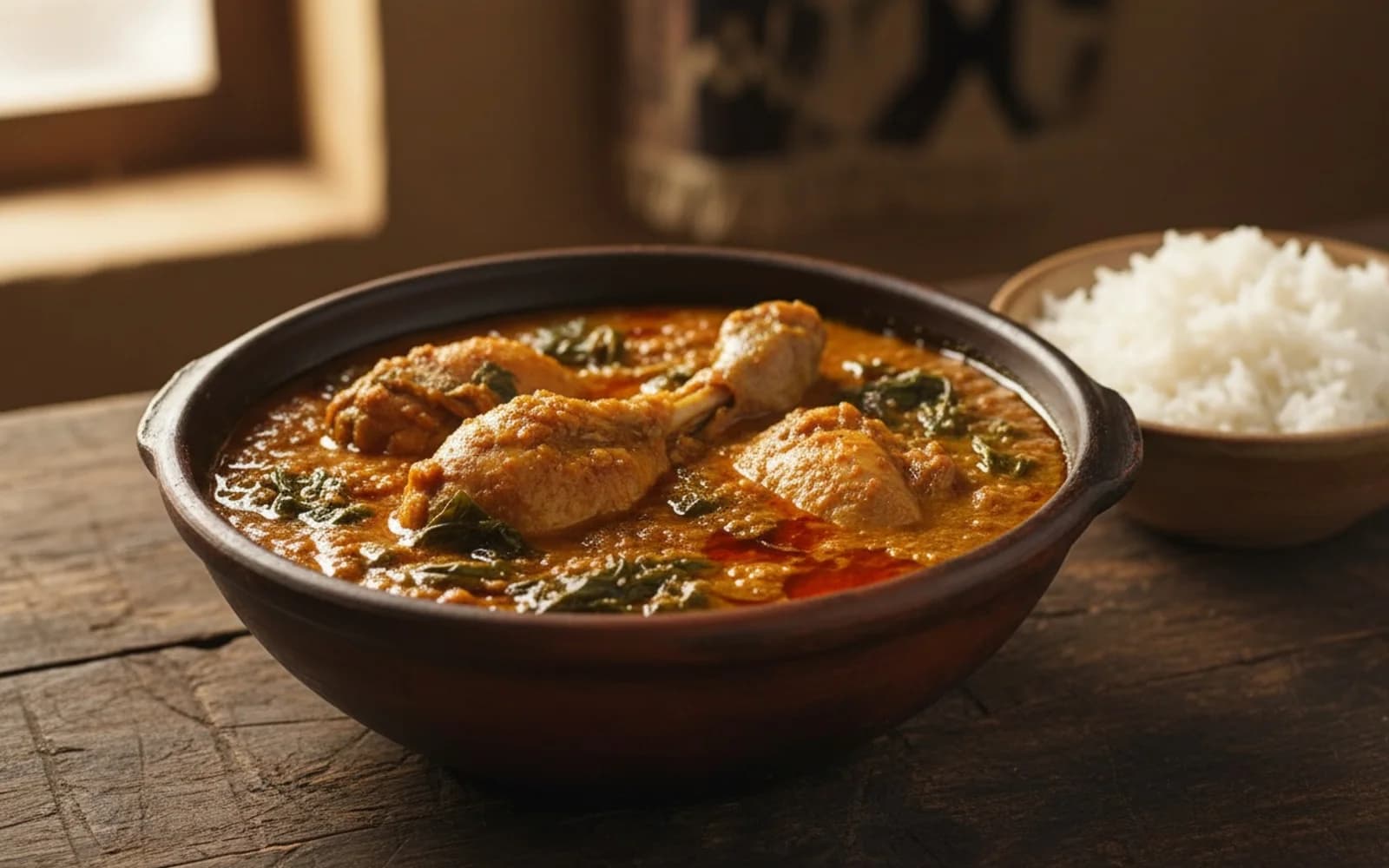
Step 7: The soup should be thick, lightly palm-oil red, and fragrant with oha's distinctive aroma. Serve immediately with fufu.
Family notes ✎
- Tearing oha by hand is tradition — elders say knives turn the leaves bitter.
- Oha cannot be replaced with spinach or other greens. Freeze oha when in season.
- Some families add a small quantity of achi alongside cocoyam for extra body.
Substitutions
- Preferred: Fresh oha leaves in season — freeze extras for later.
- Preferred: Cocoyam (edo) for thickening.
- Emergency: Frozen oha leaves from African markets.
- Emergency: Omit cocoa pod ash if unavailable — soup still works, flavor differs slightly.
On the calendarWhen oha appears in market, traditional weddings, and the soup that means someone important is visiting.
Dietspora · Recipe Ebook
The Nigerian-American Table
Nigerian-American
Go deeper
The Nigerian-American Table
Nigerian home cooking for the diaspora kitchen — 51 recipes and pages to record your family's version.
Get the guide — $29