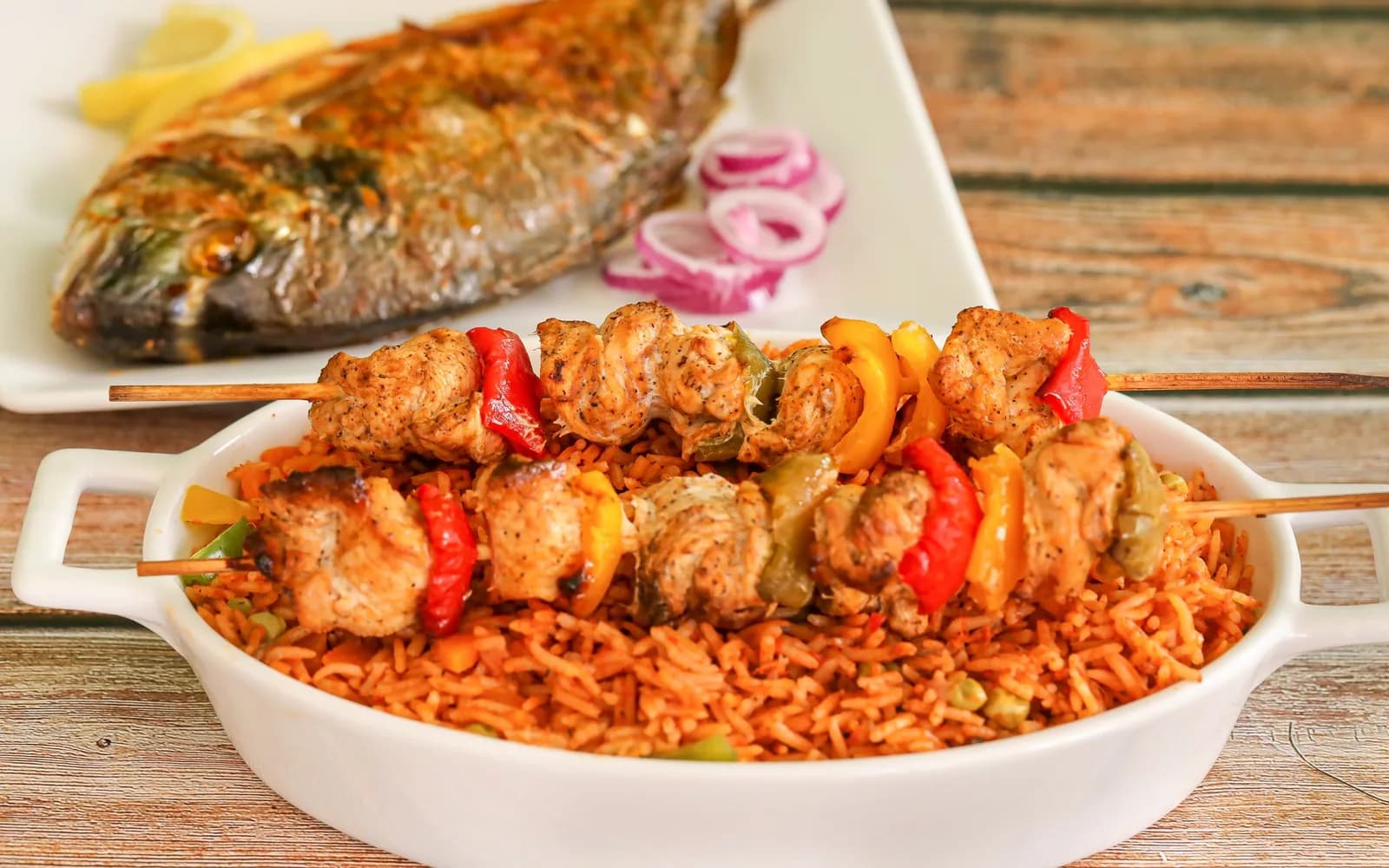
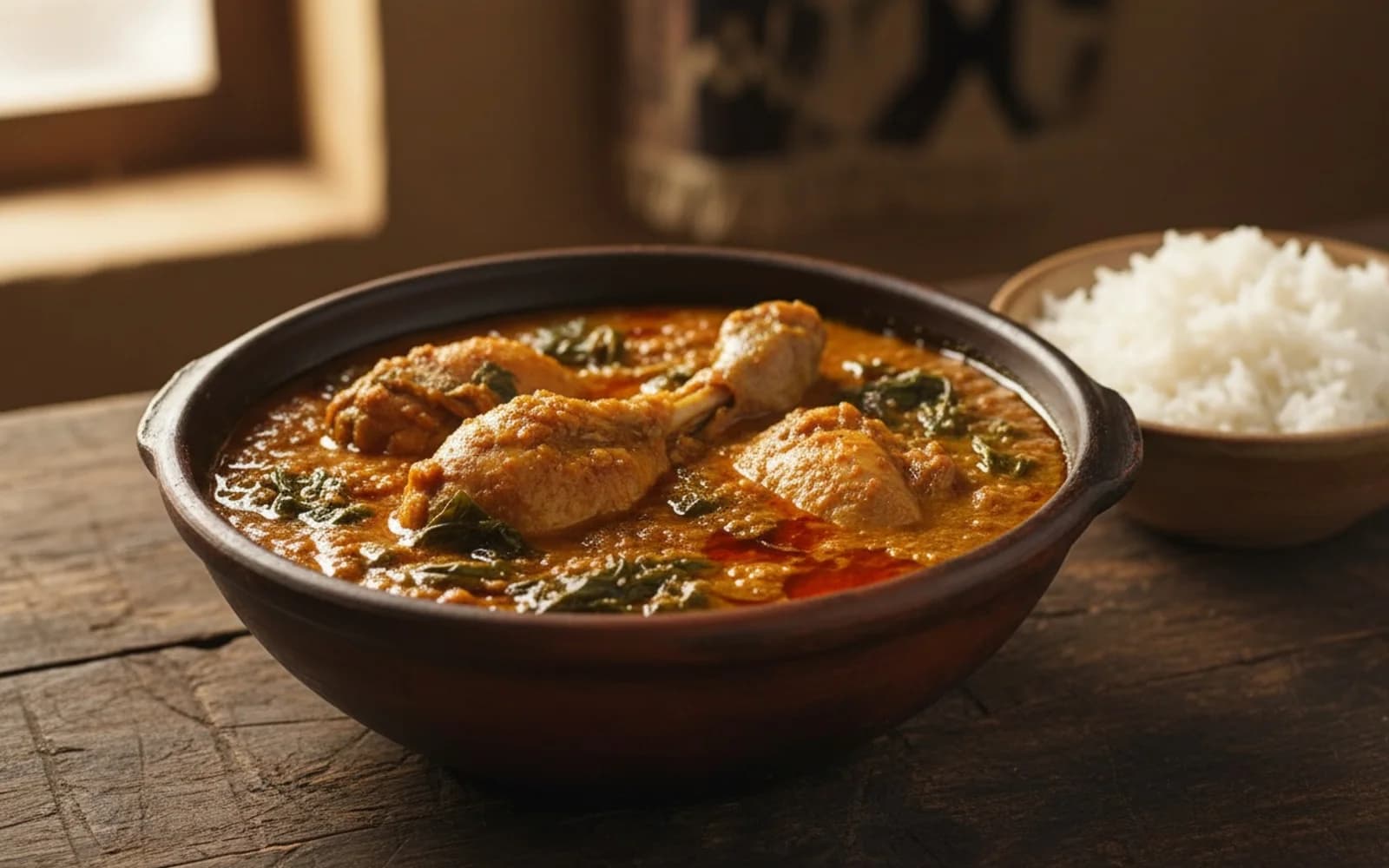
Rice and Stew
Rice and stew is the Sunday constant — plain white rice with a long-simmered tomato stew (obe ata) and whatever protein the week afforded. It is simple on the plate and deep in memory: the stew made ahead, the rice fresh, the table set before church let out.
- Time
- 2 hr
- Serves
- 6–8
- Patience
- Some patience
- Occasion
- Sunday dinner
Where this dish comes from
Across Nigerian homes, Sunday rice and stew is less a recipe than a ritual. The stew — fried until oil rises, rich with bell peppers and scotch bonnet — is often made in bulk and reheats through the week. The rice is always plain, fluffy, and white, a canvas for the stew.
This template pairs the two components as they are served together. For a deeper dive into the stew alone, see Nigerian Red Stew (Obe Ata) in this collection.
Ingredients
Obe ata (tomato stew)
- 1/3 cup (80 ml) palm oil or neutral oil
- 1 large onion (about 8 oz / 225 g), half blended with tomatoes, half sliced
- 6 ripe plum tomatoes (about 1 1/2 lb / 680 g), blended smooth
- 2 red bell peppers, blended with tomatoes
- 1–2 scotch bonnet peppers, blended or whole
- 3 tbsp (45 g) tomato paste
- 2 seasoning cubes, crushed
- 1 tsp dried thyme
- 2 lbs (900 g) chicken pieces (drumsticks and thighs) or beef stew meat
- 1 tsp salt, plus more to finish
White rice
- 3 cups (600 g) long-grain rice, rinsed
- 4 1/2 cups (1 L) water
- 1 tsp salt
The method
Step 1: Season chicken or beef with salt and half a seasoning cube. Set aside while you build the stew base.
Step 2: Blend tomatoes, bell peppers, scotch bonnet, and half the onion until smooth. Set aside.
Step 3: Heat palm oil in a heavy pot over medium. Fry sliced onion until soft, 4–5 minutes. Add tomato paste and fry, stirring, until it darkens and smells rich — about 3 minutes.
Step 4: Pour in the blended pepper mix. Add thyme and remaining seasoning cube. Simmer uncovered, stirring occasionally, until the stew thickens and a layer of red oil floats on top — 25–35 minutes. The raw tomato smell should be completely gone.
Step 5: Add seasoned meat to the stew. Add 1/2 cup (120 ml) water if needed. Cover and simmer until meat is cooked through and tender — 30–40 minutes for chicken, up to 90 for beef. The stew is done when oil beads on the surface and the meat falls off the bone (for chicken).
Step 6: While stew simmers, cook rice: bring water and salt to a boil, add rinsed rice, stir once, cover, and cook on low 18–20 minutes until tender. Rest 5 minutes, then fluff.
Step 7: Serve rice in mounds with stew and meat ladled over the top. Some families mix on the plate; others keep them separate until eating.
Family notes ✎
- The stew often tastes better on day two — many families cook it Saturday for Sunday.
- Fried plantain on the side is common in Yoruba households; Igbo Sunday tables may add a soup instead.
- Beef stew versions cook longer and may include iru (locust beans) for depth.
Substitutions
- Preferred: Red palm oil for authentic color and flavor in the stew.
- Preferred: Fresh plum tomatoes in season; canned whole tomatoes (1 large can) off-season.
- Emergency: Vegetable oil plus 1 tsp paprika if palm oil is unavailable.
- Emergency: Turkey wings or oxtail instead of chicken for a richer Sunday pot.
On the calendarSunday after church, family check-ins, and the meal that meant everyone was home.
Dietspora · Recipe Ebook
The Nigerian-American Table
Nigerian-American
Go deeper
The Nigerian-American Table
Nigerian home cooking for the diaspora kitchen — 51 recipes and pages to record your family's version.
Get the guide — $29